


The aerospace industry's demand for lightweight, high-strength, and highly reliable composite materials has driven breakthroughs in epoxy resin-based carbon fiber prepreg technology, focusing on multi-scale structural design and interfacial enhancement. This article systematically explores interfacial reinforcement mechanisms and multi-scale synergistic effects from perspectives including carbon fiber surface modification, nanoreinforcement regulation, resin matrix toughening, and process optimization. Using aerospace-grade prepreg preparation case studies, it proposes a technical pathway integrating molecular dynamics simulations with process parameter coupling optimization, providing theoretical support for next-generation aerospace composite development.
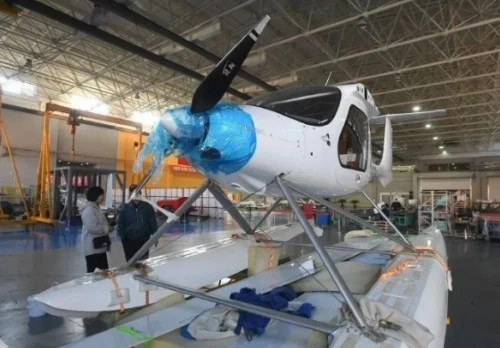
Carbon Fiber Reinforced Epoxy Composites (CFRP),CFRP has become a core material for aerospace primary load-bearing structures due to its high specific strength, fatigue resistance, and design flexibility. However, challenges persist: insufficient interfacial bonding strength due to carbon fiber surface inertness, toughness deficiencies from highly crosslinked resin matrices, and porosity control during complex component manufacturing. Recent research emphasizes multi-scale reinforcement regulation and interfacial chemical bonding technologies. Synergistic effects from nanoparticles, whiskered structures, and molecular-level interface design can significantly improve load transfer efficiency and damage tolerance.
I. Multi-Scale Carbon Fiber Surface Modification
1,Chemical Grafting & Oxidation
Oxidation: Gas-phase (O₃/O₂ mixtures) or liquid-phase (HNO₃ immersion) oxidation introduces carboxyl/hydroxyl groups to enhance wettability.
Grafting: Amino-terminated naphthalene diimide (NDI) or polyethyleneimine (PEI) grafting establishes covalent bonds between fibers and epoxy. PEI (MW=600) increases interfacial shear strength (IFSS) by 38.9% and flexural strength by 36.7%.
2,Nanoreinforcement Hybrid Modification
CNTs Grafting: CNTs anchored via π-π stacking and carboxyl-amine reactions create "rivet" structures. At CF-PEI/CNT-COOH=2:1 mass ratio, IFSS increases by 74.1% and flexural strength by 55.2%.
GO Anchoring: Vertically aligned GO sheets form medium-modulus interlayers for stress transfer. Optimal CF-PEI/GO=40:1 ratio achieves nanoscale interlayer spacing control.
3,Whiskerization & Nanofiber Interfaces
Chlorinated Aramid Nanofiber (CI-ANF) Coating: Plasma-treated fibers coated with CI-ANF networks via dip-coating enhance IFSS by 79.8% and short-beam shear strength (SBS) by 33.7% through van der Waals forces, hydrogen bonds, and π-π interactions, without compromising tensile strength.
II. Epoxy Matrix Toughening & Rheology Control
1,Reactive Interpenetrating Networks
Core-shell rubber particles or thermoplastic/epoxy blends form interpenetrating networks. At 10% toughener content, compression-after-impact (CAI) strength reaches 330 MPa, fracture toughness increases by 40%, with only 6°C Tg reduction.
2,Rheology Optimization
Reactive diluents (e.g., butyl glycidyl ether) reduce resin viscosity from 5000 to 1500 mPa·s, improving fiber impregnation and minimizing prepreg porosity.
III. Multi-Scale Process Synergy
1,Interface Regulation & Melt Impregnation
Compatibilizers enhance fiber/thermoplastic adhesion (e.g., significant IFSS improvement).
Transcrystallinity control: Temperature/time optimization increases transcrystalline layer thickness and interfacial strength.
2,Aerospace Prepreg Case Studies
T800 Carbon Fiber/Epoxy: Areal density 120 g/m², resin content 38%, tensile strength 2800 MPa (wing skin applications).
Toray T1100G/3960 Resin: Tensile strength 6.3 GPa, modulus 310 GPa (Airbus A350 fuselage).
IV. Interfacial Mechanisms & Characterization
Multi-Scale Interface Models
- Mechanical interlock theory: Surface roughness enhances fiber/resin anchoring.
- Chemical bonding theory: Covalent bonds via grafted functional groups.
- Interphase theory: Medium-modulus interlayers mitigate stress concentration.
Microscopy Techniques
- XPS: Surface chemistry analysis.
- SEM: Interface morphology/failure modes.
- AFM: Roughness/elastic modulus gradient mapping.
V. Conclusions & Outlook
Epoxy-based carbon fiber prepregs require multi-scale modifications, matrix toughening, and process synergy to advance aerospace applications. Future directions:
- Bio-based compatibilizers: Renewable alternatives to reduce environmental impact.
- Digital twins: Process simulations to optimize porosity and fiber distribution.
- Self-healing interfaces: Dynamic covalent bonds/supramolecular interactions for damage repair.
Through interdisciplinary innovation, these composites will expand into extreme applications like engine blades and deep-space probes, driving aerospace systems toward lighter, stronger, and smarter paradigms.
Source: Composites Eco-Circle